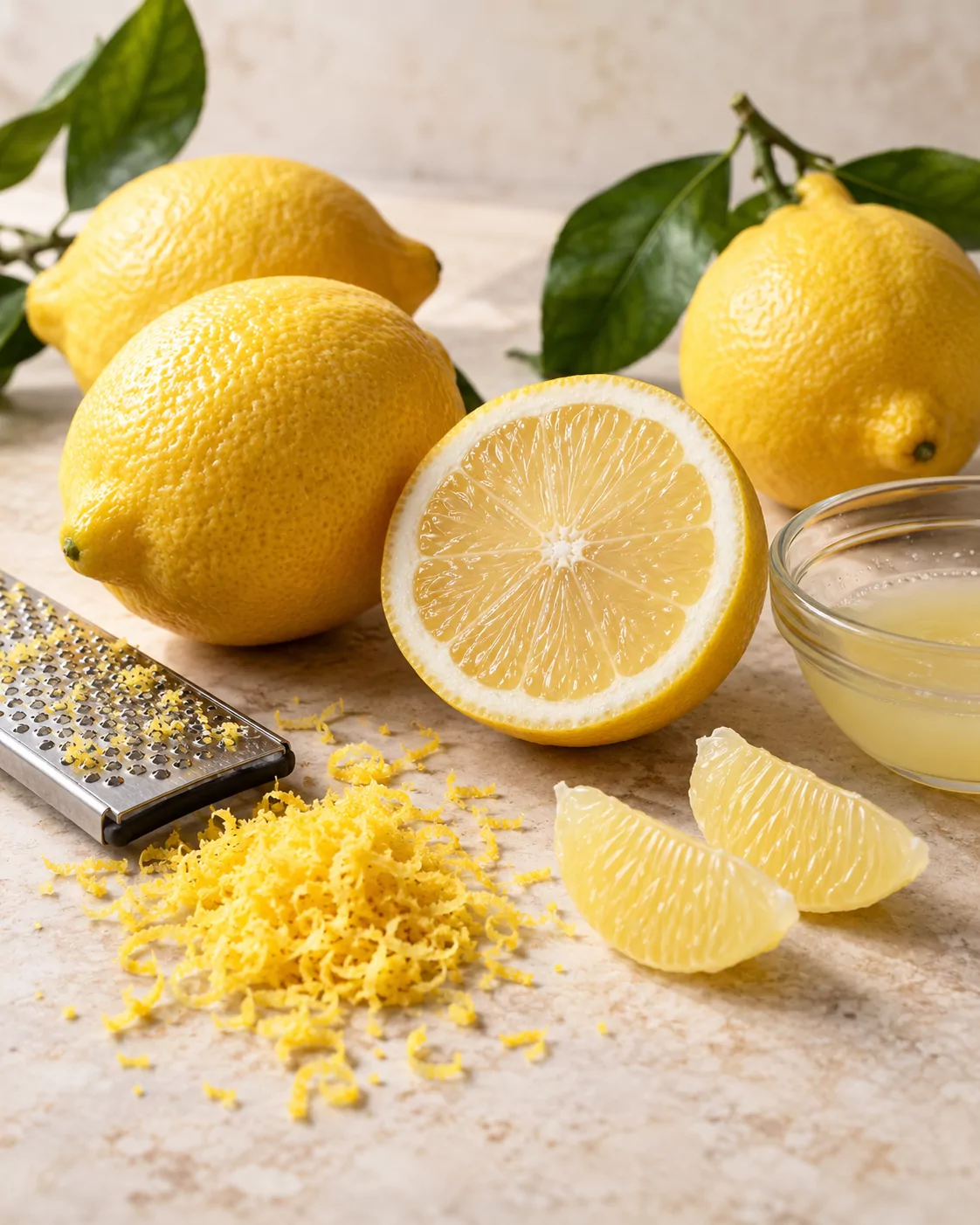
Lemon
Use zest for aroma, juice for acidity and clean segments as an ingredient with their own weight and texture.
- Flavor
- Fragrant, sharply acidic and gently bitter at the pith
- Texture
- Juicy flesh beneath an aromatic oil-rich rind
- Best role
- Acid, aroma or distinct citrus pieces
- Prime move
- Choose which role the salad needs before cutting
Five steps to controlled citrus
Choose the role
Decide whether the bowl needs aroma, acidity or pieces of fruit. Zest can add fragrance without more liquid; juice supplies acid and water; segments create distinct juicy bites.
Avoid automatic squeezing: the salad may already contain enough liquid.
Wash, dry and zest first
Rinse the whole lemon under running water, dry it with a clean towel and collect zest while the fruit is intact. Remove only the colored outer layer rather than grating the coarse white pith.
Capture the oils: zest directly over the bowl where it will be used.
Juice in measured additions
Remove visible seeds and measure the first addition. Lemon acidity varies, so use a recipe quantity as a starting point and taste before adding more.
Stop before harshness: crushing rind and pith for the final drops can make the juice coarse.
Segment when fruit is the ingredient
Stand a trimmed lemon securely, remove rind and pith along the curve, then cut beside each membrane over a bowl. Save the membrane bundle’s juice for the dressing.
Distribute deliberately: lemon segments are more assertive than orange or grapefruit.
Balance and add at the right time
Taste acid with the salt, fat, bitterness and moisture already in the bowl. Dress delicate leaves near service; sturdy grains, beans and warm vegetables can take lemon earlier.
Correct thoughtfully: zest can add freshness without thinning a dressing.
Judge soundness before color
The best lemon is not defined by one perfect shade of yellow. Cultivar, harvest stage and handling affect color. Look for fruit that is firm, sound and free from shrivelling, decay or damaged patches. A smooth, resilient rind is generally easier to zest than one that has dried and hardened.
UC Davis Postharvest Research and Extension lists color uniformity, firmness and freedom from decay, mechanical damage and rind defects among commercial quality indicators. Those cues help at the shop, but its commercial storage conditions are not a home shelf-life promise.
Use temperature to manage quality
A cool room can suit whole fruit that will be used promptly. Refrigeration is practical when the kitchen is warm or the fruit will wait, because it slows quality loss. Home refrigerators, fruit maturity and previous handling vary too much for one universal duration.
Once a lemon is cut, cover the exposed surface or move pieces and juice to a clean covered container and refrigerate promptly. A dried face, fermented aroma, visible mould or leaking decay signals quality failure. Appearance and smell can identify deterioration, but they do not prove that mishandled food is safe.
Wash before the tool crosses the rind
Rinse under running water before zesting or cutting, even when the white pith will not be eaten. A knife or zester crosses the rind and can carry surface contamination inward. Do not use soap or commercial produce wash; the U.S. Food and Drug Administration recommends running water and drying with a clean towel.
Use a fine grater for dressing, a channel zester for visible curls or a vegetable peeler for broad strips that can be finely sliced. If the salad includes garlic, salt or mustard, rub the zest briefly into those ingredients to distribute it. The purpose is even fragrance, not prolonged grinding.
Do not chase every last drop
Cut across the equator for a hand squeeze or lengthwise into wedges. A reamer or press gives more juice; squeezing through clean fingers catches seeds while allowing pulp through. Add juice to salt, mustard or another water-based ingredient before whisking in oil.
For an already dressed salad, test a few drops on one bite rather than squeezing half a lemon over the whole bowl. If a firm lemon gives little juice, use its sound zest for aroma and choose another fruit for the required liquid instead of crushing the rind.
Make citrus pieces clean and intentional
Slice a thin disc from the top and bottom so the lemon stands securely. Following the curve with a sharp knife, remove rind and pith in narrow strips. Hold the peeled fruit over a bowl and cut beside each membrane to release the segments, then squeeze the remaining membrane bundle separately.
Cut segments smaller than orange or grapefruit pieces and fold them in after heavier ingredients have been mixed. They can suit bitter leaves, roasted vegetables, olives and rich cheeses, but should not be hidden in every forkful.
Account for both acid and water
In cucumber, tomato or citrus salads, lemon juice joins liquid already escaping from the ingredients. Start with less, toss and assess the bowl. Dry grains or beans may absorb part of a dressing, so reserve a small quantity to restore gloss before serving.
If a dressing is sharply sour, it may need more oil, a pinch of salt or an ingredient with body such as tahini or yogurt—not automatic sugar. If it tastes dull, more juice is only one option. Lemon is central to Lemon-Tahini Dressing and connects directly to the broader decisions in How to Use Fruit in Savory Salads.
Correct the actual problem
If a dressing is sour but not lively, add a little fresh zest rather than more juice. If zest tastes bitter, use lighter pressure and avoid the pith. If the salad is watery, count lemon juice alongside tomato, cucumber and other released liquid before adding the rest of the dressing.
If segments fall apart, use a sharper knife and fold them in later. Useful juice caught while segmenting can become the measured acid in a vinaigrette. The aim is to account for it rather than pour a full dressing over an unseen pool.
Sources: UC Davis Postharvest Research and Extension Center, Lemon; U.S. Food and Drug Administration, Selecting and Serving Produce Safely.