Som Tam
Cool green papaya struck through with lime, chile, palm sugar and fish sauce—pounded just enough to absorb the dressing while keeping its snap.
Jump to recipe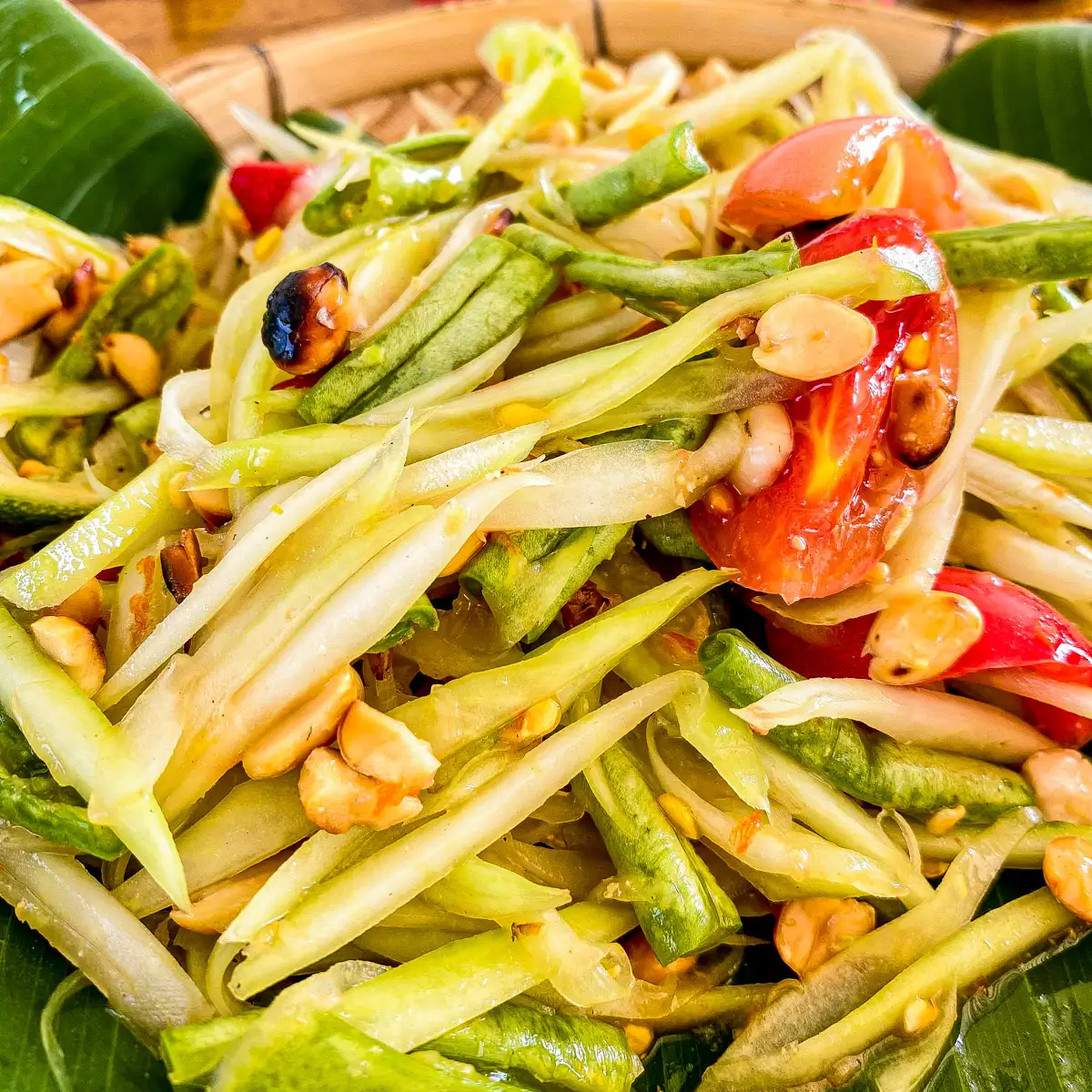
- Prep
- 25 minutes
- Total
- 25 minutes
- Serves
- 2
- Role
- Side
Why this recipe works
The style is clearly defined. Peanuts and dried shrimp place this recipe in the sweet-sour central Thai som tam thai family rather than standing in for every regional form.
The dressing is built before the papaya arrives. Palm sugar dissolves and the balance can be corrected without overworking the strands.
Pounding and tossing happen together. Light blows open the vegetables while the spoon keeps them moving; nothing is crushed into a paste.
Pound and toss
Prepare the papaya
Peel the green papaya, halve it, and scrape out the pale seeds. Shred the firm flesh into long, fine strands with a julienne peeler or mandoline. Rinse the strands briefly in ice water, drain, and dry thoroughly. Measure 400 g.
Pound the aromatics
In a large clay mortar, pound the garlic and chilies with a wooden pestle until broken into a coarse, fragrant mash. They should no longer be whole, but need not become a smooth paste.
Balance the dressing
Add the palm sugar and pound to soften it. Add the lime juice and fish sauce, then stir with a large spoon against the mortar until the sugar dissolves. Taste: it should be distinctly sour, salty, sweet and hot, with no single note erasing the others.
Bruise the vegetables
Add the long beans and pound 3 or 4 times to crack their surfaces. Add the tomatoes and press only until they release a little juice; keep the halves visibly intact.
Pound and toss together
Add the papaya, dried shrimp, and 30 g of the peanuts. With the spoon in one hand and pestle in the other, lift and turn the strands while giving light, glancing taps. Continue for about 1 minute, until the papaya bends slightly and is evenly glossed but still crisp.
Finish and serve
Transfer the salad and every spoonful of dressing to a shallow plate. Scatter over the remaining 10 g peanuts and serve immediately.
Force changes with every ingredient
Select
Choose a hard, heavy papaya with green skin and pale, firm flesh. Any orange blush inside means it has begun to ripen.
Shred
Long, fine strands take seasoning while retaining crunch. Dry them well so water does not dilute the dressing.
Crush
Garlic and chile take the firmest blows because their aroma and heat need to be released first.
Dissolve
Palm sugar must disappear into lime and fish sauce before bulky vegetables make the mortar difficult to stir.
Bruise
Beans can crack; tomatoes should merely slump at the edges. Their juice becomes part of the dressing.
Lift
Once papaya enters, alternate spoon and pestle. A glancing tap seasons; a heavy downward blow destroys the texture.
Adjust the heat honestly
Two bird’s-eye chilies make a clearly hot salad, but chile strength varies. Use 1 for a gentler bowl or 4 for a fiercer one; change the count before pounding rather than trying to remove heat later. Keep the core lime–fish sauce–sugar balance intact.
A vegetarian adaptation
For a vegetarian version, omit the dried shrimp and replace the 2 tablespoons fish sauce with an equal amount of a good vegan fish sauce. Check that the palm sugar is suitable for your diet. This adaptation keeps the same mortar sequence but has its own savory profile.
Serve now, not later
Som tam is at its best within minutes, while the papaya is crisp and the peanuts remain distinct. You may shred and thoroughly dry the papaya up to 1 day ahead and refrigerate it airtight. Do not pound the finished salad in advance; leftovers soften quickly and are best eaten the same day.
One style within a wide family
The history of papaya-based som tam is debated, and the name encompasses more than one fixed recipe. This central Thai-style bowl is sweeter and more lime-forward, with peanuts and dried shrimp. Isan and Lao-related forms may use fermented fish; others include salted crab, rice noodles, corn, cucumber or fruit. They are distinct traditions and variations, not interchangeable add-ins. Visit the World Salads collection and compare its mortar-built energy with Classic Caesar Salad.
Cultural context and variations: Michelin Guide.