Classic Vinaigrette
Sharp, glossy and built to cling: a dependable red wine vinaigrette, plus the judgment to make it suit the salad in front of you.
- Prep
- 10 minutes
- Yield
- About 1 cup / 250 ml
Every ingredient has a job
Supplies the bright, winey acidity that gives the dressing direction.
Rounds the acid, carries aroma, and gives the vinaigrette weight and flow.
Defines the flavors. Dissolving it in vinegar first prevents gritty pockets.
Adds gentle heat and helps dispersed droplets of oil stay suspended longer.
Contributes a dry, fragrant edge without changing the basic formula.
Ingredients
- 1/4 cup red wine vinegar (60 ml)
- 2 teaspoons Dijon mustard
- 1/2 teaspoon fine sea salt
- 1/4 teaspoon freshly ground black pepper
- 3/4 cup extra-virgin olive oil (180 ml)
Optional aromatics
For one batch, add 1 tablespoon minced shallot, 1 small grated garlic clove, or 1 tablespoon finely chopped tender herbs. Let shallot sit in the vinegar for 5 minutes before whisking; add herbs at the end. These are variations, not part of the exact base recipe.
Whisk it into focus
Dissolve the seasoning
Whisk the red wine vinegar, Dijon, salt, and black pepper in a medium bowl until the salt has dissolved and the mixture is completely smooth.
Start the emulsion
Whisk constantly while adding the olive oil a few drops at a time. Continue until the mixture turns opaque and begins to thicken.
Finish in a thin stream
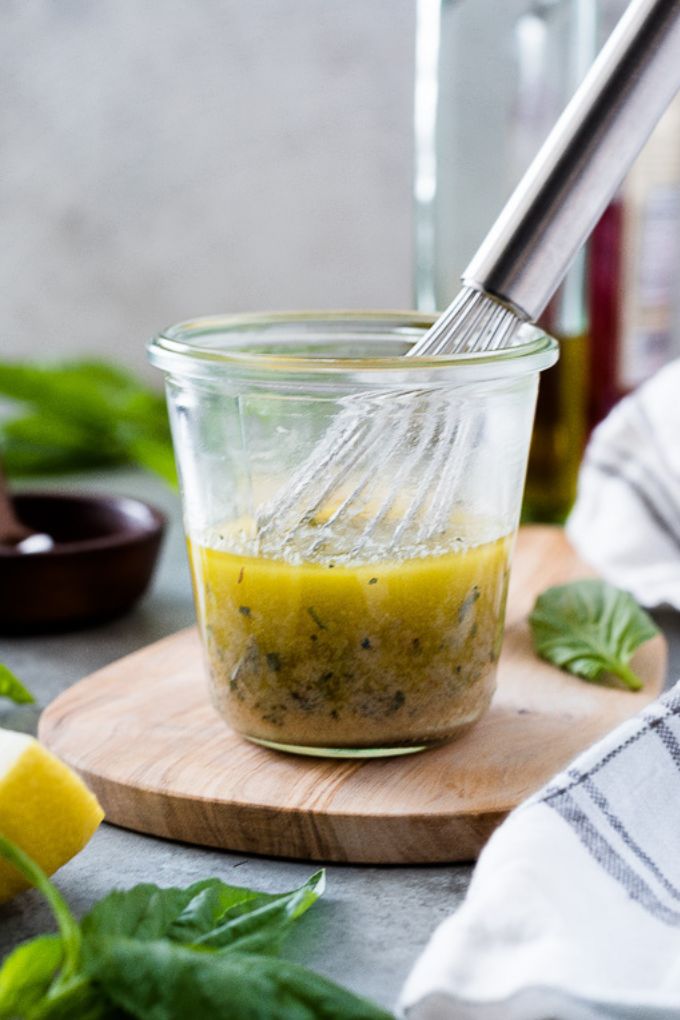
Pour in the remaining oil in a slow, narrow stream while whisking steadily. The finished vinaigrette should look glossy and lightly thickened.
Taste on the salad
Dip in a leaf or a piece of the ingredient you plan to dress. Adjust with a few drops of vinegar for brightness or a small pinch of salt for definition. Whisk again before serving.
Start at three to one
This recipe uses three parts oil to one part vinegar by volume. It is a useful starting point, not a universal ideal. Tender leaves often want a lighter hand and a brighter dressing; grains and roasted vegetables can absorb more oil and seasoning; sweet or mild acids may need a different balance.
A plain oil-and-vinegar mixture is a temporary emulsion: agitation disperses the oil, then it separates. Dijon makes the emulsion more persistent, but not permanently stable; this homemade vinaigrette can still settle. Separation is normal—whisk or shake it back together.
The jar method
Put every exact-recipe ingredient in a clean jar with a tight lid. Shake hard for 20 seconds, pause, then shake once more. A jar makes fast work of a small batch and is convenient for re-emulsifying leftovers. Whisking offers finer control and makes it easier to see when the mixture begins to thicken.
Taste and adjust
Too sharp? Add oil one tablespoon at a time. Flat? Try salt before adding more vinegar. Too heavy? Add vinegar or a teaspoon of water. Needs roundness? A small pinch of sugar or 1/2 teaspoon honey can soften a severe acid, but sweetness should not erase the dressing’s edge.
Choose the oil and acid
Robust olive oil and red wine vinegar suit tomatoes, beans and bitter leaves. A milder olive oil with lemon or champagne vinegar flatters tender greens. Neutral oil lets rice vinegar or citrus lead. Sherry vinegar brings nuttiness to grains and roasted vegetables; cider vinegar works especially well with apples, cabbage and roots.
Variations with a clear purpose
For a herb vinaigrette, fold in parsley, chives or tarragon just before serving. For whole-grain mustard vinaigrette, replace half the Dijon with whole-grain mustard. For a warmer profile, use sherry vinegar and add 1/2 teaspoon honey. Citrus can replace some or all of the vinegar, but taste it first: every lemon and orange carries a different balance.
Storage
Refrigerate the unadorned base in a clean, sealed jar for up to 1 week. If you add fresh garlic, shallot or herbs, use it within 3 days. Olive oil may cloud or firm when cold; let the jar stand at room temperature for 15–20 minutes, then shake. Discard dressing with mold, fermentation, or an off smell.