How to Blanch Vegetables for Salad
Use a brief cook, a deliberate stop and thorough drying to make vegetables tender enough for dressing without surrendering their shape.
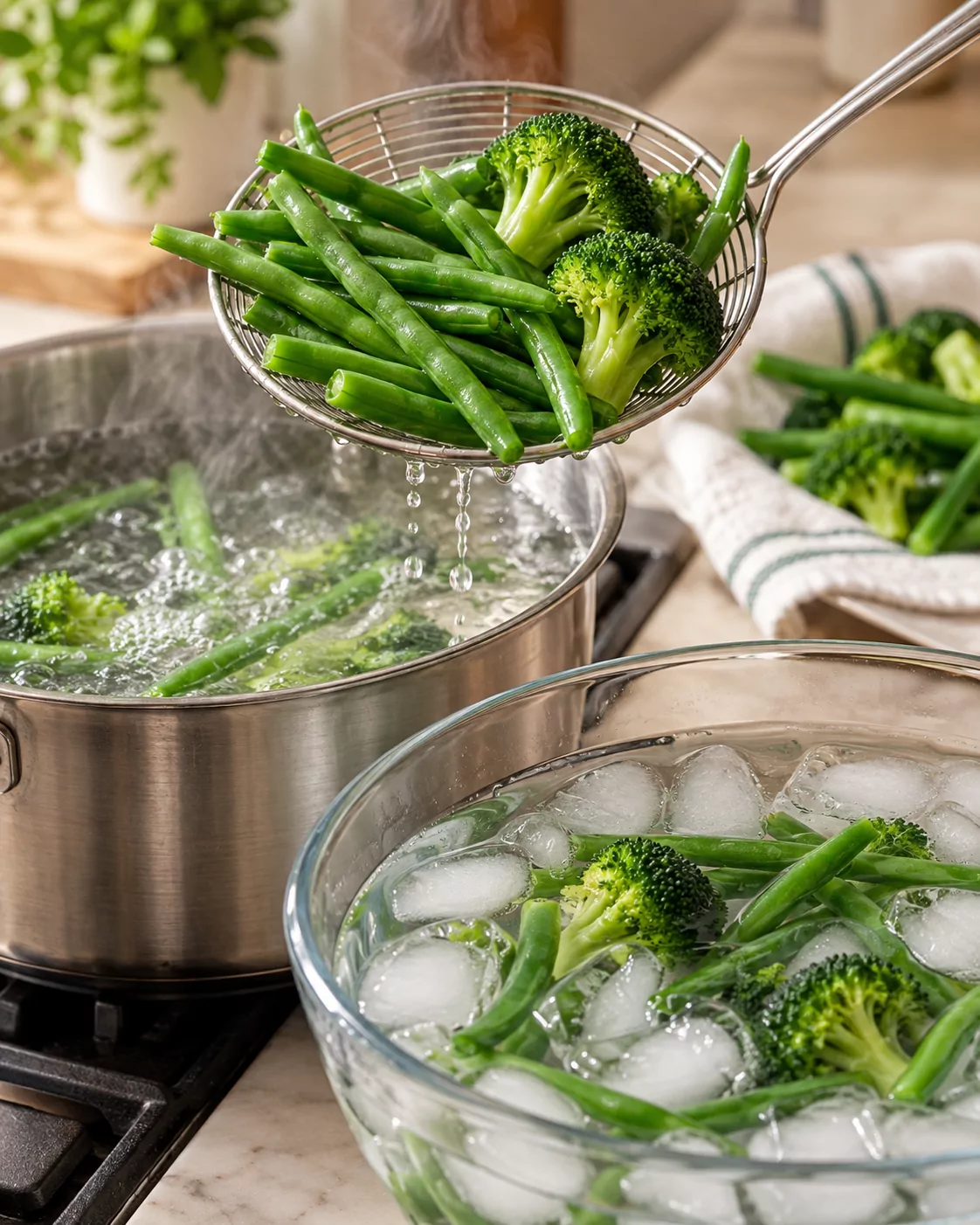
Blanching is the narrow bridge between raw and fully cooked. A brief trip through boiling water can take the squeak out of a green bean, soften the woody edge of asparagus or make broccoli tender enough to accept dressing while leaving each vegetable recognizably itself.
Five steps from raw to ready
Group by density
Make batches that can finish together: slender green beans in one, broccoli florets of similar size in another, peas on their own. Cook pale or mild vegetables before strongly flavored or darkly pigmented ones when reusing the water.
Keep control: separate batches are easier than asking unlike vegetables to obey one clock.
Cut for even cooking
Trim tough ends and make pieces compatible in thickness. Keep them large enough to retrieve and drain cleanly; peel fibrous broccoli stems and slice the tender core separately from the florets.
Set up first: place a colander and, when needed, an ice-water bowl beside the hob before anything enters the pot.
Blanch to a sensory cue
Lower one batch into genuinely boiling water, stir once and begin checking early. Cool a sample briefly and bite it: the center should no longer taste raw, yet the piece should still offer the resistance the salad needs.
Use time as a prompt: size, maturity, batch volume and intended texture all change the endpoint.
Cool, then get genuinely dry
Move the vegetables straight to ice water and stir so cold water reaches every surface. Remove them once cool, drain thoroughly, then spread and blot them on a clean towel or absorbent paper.
Protect the dressing: surface water dilutes vinaigrette and stops creamy dressings from clinging.
Dress for the texture you made
Taste a vegetable with the actual dressing before seasoning the whole bowl. Dense pieces can accept vinaigrette a little earlier; tender tips, leaves, herbs and dry crunch are better added later.
Finish deliberately: the vegetable should taste complete while still belonging to the rest of the salad.
Decide what blanching should change
Blanch vegetables that are edible raw but too tough, fibrous or assertive for the composition you are making. Green beans, snap peas, asparagus, broccoli florets, cauliflower and shelled peas are obvious candidates. Thin carrot slices can be briefly blanched when you want flexibility without the softness of roasting.
Delicate leaves rarely need the same treatment, and watery vegetables such as cucumber or tomato gain little from it. For salad, blanching is generally about texture and temperature rather than preservation. Published freezing schedules answer a different question and may not produce the crisp-tender result you want in a bowl.
Wash first and keep batches manageable
Wash produce under running water before cutting, use clean hands and equipment, and keep it separate from raw meat, poultry and seafood. Washing reduces surface bacteria but does not sterilize produce, so clean preparation still matters. This handling follows the U.S. Food and Drug Administration’s produce-safety guidance.
Bring a generous pot of water to a true boil before the first batch. Salt is optional. It can season the surface, but it is not a substitute for seasoning the finished salad. If cheese, olives, capers or cured ingredients are already salty, lightly salted or unsalted water leaves more room to adjust later.
Read color, resistance and the center together
Small peas may need only tens of seconds; fine asparagus or snap peas may need roughly one to two minutes; green beans and broccoli often need longer. These are starting points, not universal promises. Lift out a piece, cool it enough to taste and judge the thickest part.
Green beans should bend slightly before snapping, asparagus should yield at the thick end and broccoli stems should be tender enough to pierce without collapsing. Color can brighten during cooking, but color alone does not prove that the center is ready. University of Minnesota Extension notes that overblanching produces soft vegetables and that rapid cooling limits further cooking; its detailed timing table is intended for preservation, not as a fixed salad schedule.
Cooling is part of the cooking decision
An ice bath is the consistent choice for a dense or substantial batch. Very cold running water can work for a small amount, but only if every piece cools quickly. Use a spider or fine strainer for peas and other small pieces so they do not disappear beneath the ice.
Remove vegetables as soon as they are cool. A prolonged soak can waterlog their flavor and soften their texture. If you want warm vegetables, skip the ice bath only when you will drain, dress and serve them promptly and residual heat will not spoil the intended bite. “Warm” should be a deliberate serving temperature, not the result of forgetting the colander.
Keep contrast outside the water
Cool, dry vegetables can be prepared shortly before assembly and kept chilled in a covered container. Add crisp leaves, herbs, toasted nuts or fried bread only when their texture can still provide contrast. A sharp vinaigrette may need the vegetable to carry a little more salt, while a salty cheese or caper-heavy dressing may need none.
Blanching can support the cooked vegetables in Gado-Gado and the crisp green components used in many versions of Salade Niçoise. It also contrasts with the deeper browning in How to Roast Vegetables for Salad. One bowl can use both methods when each has a clear job.
When the vegetables miss the mark
- Dull and soft.The batch stayed hot too long or the cooling setup was late. Prepare first, test sooner and work in smaller batches.
- Raw center, soft outside.The pieces are too thick or varied. Split thick stems and keep like sizes together.
- Dressing slides off.The surface is still wet. Drain in a wide layer and blot before dressing.
- Watery after resting.The vegetables soaked too long or carried ice-bath water into the bowl. Dry thoroughly and dress closer to serving.
- Mixed doneness.That is a batching problem, not a failure of the technique. Cook unlike vegetables separately and combine them later.
Safety and process sources
U.S. Food and Drug Administration
Selecting and Serving Produce Safely supports rinsing produce under running water, clean preparation and separation from raw animal foods.
University of Minnesota Extension
Preserving Food at Home: Blanching Vegetables explains boiling-water blanching, rapid cooling, prompt removal from cooling water and thorough draining. Its preservation timings are not presented here as universal salad timings.