How to Toast Nuts and Seeds for Salad
Match the heat to the ingredient, watch the change closely and move the batch out of the hot pan before delicate pieces cross from fragrant to scorched.
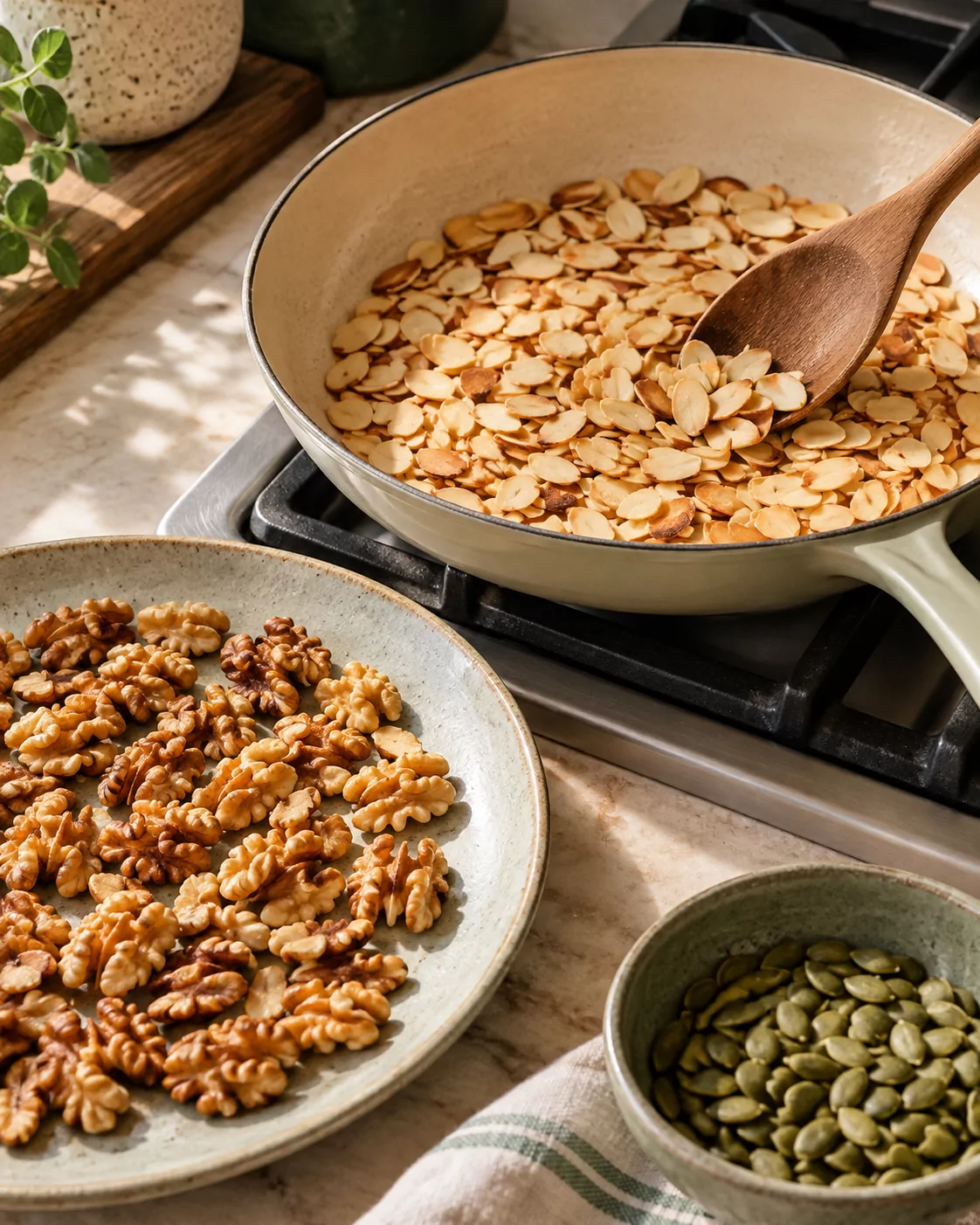
A toasted nut or seed can change the pace of a salad. The first bite is brittle, the next releases aroma and the final fragments catch dressing. That effect disappears when pieces are burnt, stale or added so early that they soften.
Five moves from raw to crisp
Sort by size and inspect
Remove shell fragments and obviously damaged pieces. Keep sliced nuts, small seeds and whole nuts in separate batches, and taste a ready-to-eat piece when there is no reason to suspect spoilage.
Start sound: heat strengthens existing flavor; it does not rescue rancid fat.
Choose skillet or oven
Use a dry skillet for a small quantity you can watch continuously. Use the oven for a larger, even batch spread in one layer on a rimmed tray. Match the method to the ingredient rather than declaring one setting universal.
Protect delicate pieces: pine nuts, sesame and sliced almonds need an especially early check.
Follow aroma, color and sound
Shake a skillet frequently and stir an oven batch at least once. Look for a clear toasted aroma and slightly deeper cut surfaces; seeds may sound dry and lively against the pan.
Check inside: split a larger nut and look for a warm, crisp center rather than a raw, waxy one.
Stop the heat in one layer
Transfer the batch immediately to a cool plate or tray. Spread rather than pile it and let it cool fully before chopping or storing, because a hot skillet continues cooking after the burner is off.
Chop when cool: a knife makes useful pieces without turning warm nuts into oily dust.
Add at the last useful moment
Add most during the final toss and reserve a smaller portion for the top. For a salad that must wait, keep the toasted batch separate until service so acid, water and trapped humidity cannot soften it.
Use enough for contrast: the topping should be present without forming a dry gravel layer.
Choose crunch for a reason
Walnuts suit apples and celery; sesame can echo a sesame-led dressing; pumpkin seeds offer a clean snap against roasted squash or cabbage; pine nuts bring delicate richness that can disappear beneath a heavy sauce. A bowl does not need a crunchy topping by default.
Decide whether pieces should be whole, roughly chopped or finely crushed. Toasting whole pieces and chopping after cooling usually creates fewer burnt edges and less oily dust. Small seeds are the exception: toast them in the form you will use.
Name allergens and substitutions clearly
Tree nuts, peanuts and sesame are among the major food allergens recognized in U.S. labeling law. If serving other people, identify the specific nut or seed rather than describing the salad only as “crunchy.” A seed is not automatically appropriate for every person avoiding nuts because individual allergies and cross-contact concerns differ.
Walnuts, pecans and almonds also differ in sweetness, bitterness and hardness. Pumpkin and sunflower seeds can bring crunch, but they do not reproduce the flavor of a tree nut. Make substitutions for a clear reason and rename the result where the nut or seed is central. This is ingredient clarity, not individual medical advice.
Choose attention or volume
A dry skillet offers speed and immediate feedback. Set it over low to medium-low heat, add one even layer and stir or toss often. It is especially useful for sesame, pine nuts and a few tablespoons of seeds. The oven is more even for volume but makes it easier to forget the tray.
Utah State University Extension gives different approaches for whole almonds, pine nuts and pumpkin seeds. Its pumpkin-seed method starts with fresh seeds removed from a squash, dried, then coated with oil and salt; it is not a universal dry-toasting temperature for purchased shelled seeds. For a general salad batch, moderate heat gives more margin than very high heat, but the ingredient remains the final guide.
Time is a reminder to look
Nuts are ready when their aroma becomes clear and their cut surfaces deepen slightly. Pumpkin and sunflower seeds may become audibly dry against the pan. Sesame changes quickly, so remove it when the batch is evenly golden rather than waiting for the darkest pieces to turn brown.
Dark skins can hide color. Break open a larger nut and taste after it cools enough to handle. If the outside is dark while the center remains raw, the heat was too high. If pine nuts are patchy, lower the heat and keep them moving rather than waiting for every pale piece to match the darkest.
Protect the texture after the pan
Season while warm only when the seasoning has a reason to adhere. A small pinch of fine salt may help; oil is not required for dry toasting. If the salad already contains salty cheese, cured olives or concentrated dressing, leave the batch unsalted and season the complete bowl.
Classic Waldorf Salad depends on walnuts retaining their texture. Bitter Leaves & Citrus uses nuts to bridge bitter leaves and juicy fruit, while Gado-Gado shows peanuts doing a different job as the body of a sauce.
When the crunch goes wrong
- Dark outside, raw center.Lower the heat and give larger pieces time to warm before their surfaces scorch.
- Patchy pine nuts.Use lower heat, stir constantly and remove the batch once the majority is ready.
- Bitter after cooling.The batch passed its useful endpoint or began rancid. Start with a sound product and stop earlier.
- Oily crumbs.The nuts were chopped while warm or processed too finely. Cool fully and use a knife.
- Soft in the salad.Water, acid or a closed humid container reached the topping too early. Keep it separate until service.
Product-specific heat and clear allergen names
Utah State University Extension
How to Roast Nuts and Seeds provides separate methods for almonds, fresh pumpkin seeds and pine nuts, supporting varied heat and sensory cues rather than one universal schedule.
U.S. Food and Drug Administration
Food Allergies identifies tree nuts, peanuts and sesame among the major food allergens and explains why specific naming and cross-contact awareness matter.