The Anatomy of a Great Salad
A salad becomes memorable when its parts cooperate: a clear foundation, deliberate proportion, more than one texture, a useful temperature and a finish that sharpens rather than crowds.
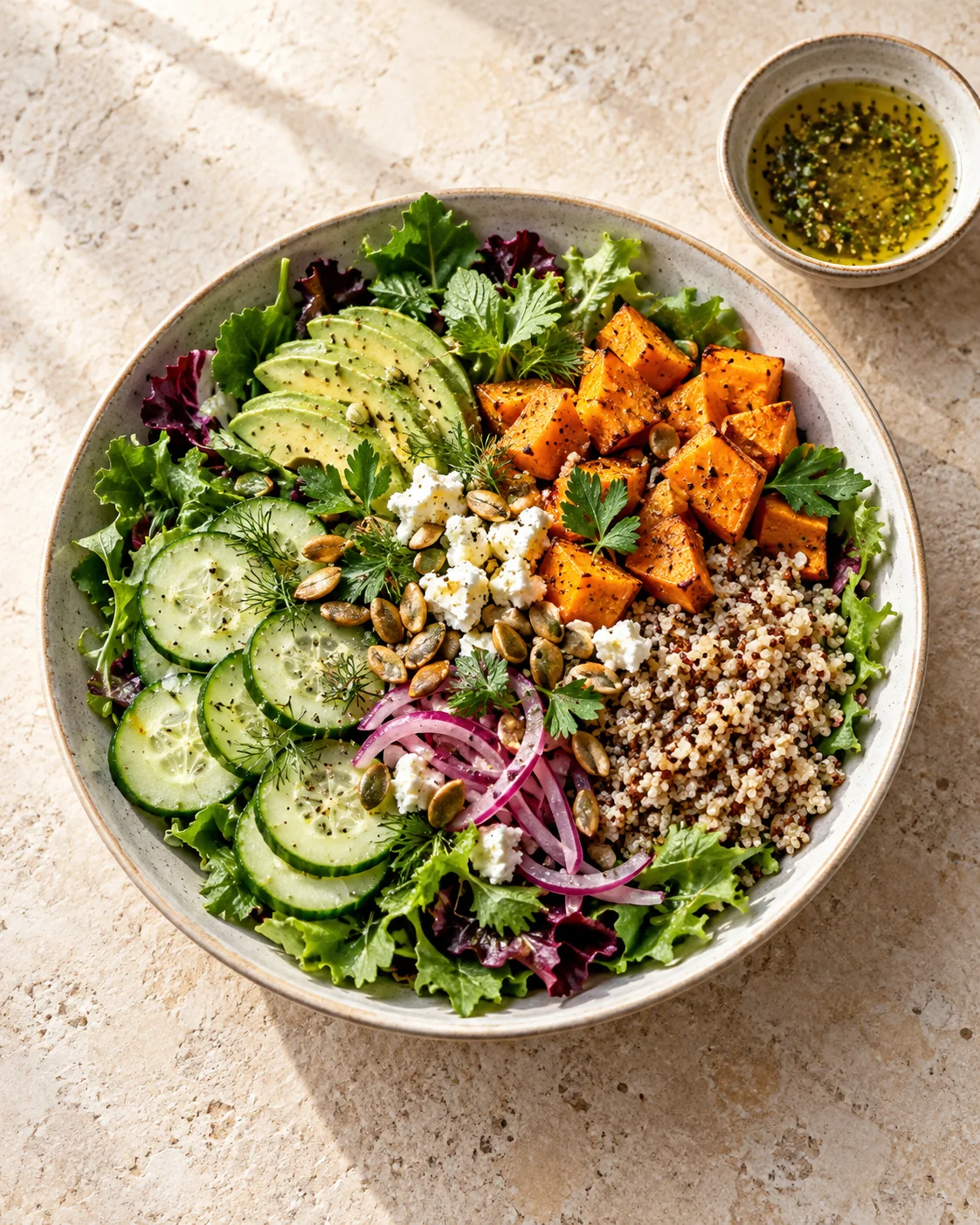
Composition begins with the forkful. If one bite is all leaves and the next is three olives, the ingredient list may be exciting but the salad is not yet organized. Cut, distribute and dress each element so the intended contrasts can meet without competing for space.
Five acts of composition
Name the center
Choose the ingredient or idea the salad is about. It may be tomatoes at their peak, a bitter-leaf contrast, warm grains or a substantial protein. Let supporting ingredients clarify that center rather than turning every available item into a co-star.
Ask: what should someone remember after the bowl is empty?
Set the proportions
The base should be present in enough quantity to establish rhythm. Rich, salty and spicy elements work as accents; a meal-sized protein needs enough presence to appear throughout. Proportion is less about arithmetic than avoiding empty and overloaded forkfuls.
Test: assemble three bites and see whether each one tells the same story.
Design contrast
Pair unlike things with a purpose: crisp with creamy, bitter with sweet, warm with cool, soft with toasted. Contrast creates momentum, but too many contrasts become noise. Choose the two or three that make the central ingredient more interesting.
Protect: add crisp and fragile elements only when the wet parts are ready.
Unify the bowl
Season components as they are prepared, then use dressing to connect them. Cut ingredients to share a fork, distribute accents evenly, and toss in a vessel with enough room to move everything without crushing it.
Build: the five-part salad framework offers a practical ingredient map.
Finish with restraint
A final herb, toasted seed, grated cheese, citrus zest or thread of oil should add aroma, texture or visual direction. If a garnish does not change the experience, leave it off. A clean ending lets the main composition remain legible.
Serve: at the temperature and pace the ingredients require.
Six systems working together
Structure
The foundation determines volume, strength and how the salad can be tossed. Leaves are one option; grains, noodles and vegetables can lead too.
Proportion
Accents need repetition without domination. Distribute them so every serving receives the intended flavor and texture.
Texture
Use crisp, creamy, chewy, juicy or brittle elements deliberately. Two clear textures are more persuasive than six muddled ones.
Temperature
Warm ingredients release aroma and soften nearby leaves; cold ingredients bring snap. Use the contrast on purpose and avoid accidental wilting.
Balance
Salt, acid, fat, sweetness, bitterness and heat shape appetite. None must be equal, but each should have a reason for its level.
Finish
The last addition controls first aroma and surface texture. Finish close to serving so herbs stay vivid and crunch stays dry.
Build a foundation that can carry the idea
Tender leaves create volume with little weight and need a delicate hand. Cabbage and kale bring chew and can hold assertive dressing. Grains, beans, noodles and potatoes make a denser foundation that absorbs seasoning. Tomatoes or cucumbers can lead a salad without any leafy base at all.
Choose one dominant structure. A bowl with equal quantities of lettuce, pasta, quinoa and beans has no clear movement. Secondary bases can help, but they should support the main one.
Cut ingredients for the same conversation
Scale controls how ingredients meet. Large wedges of tomato invite a knife and fork; finely diced tomato becomes part of a dressing. Thin radish slices distribute heat and crunch, while thick coins interrupt the bite. Crumbled cheese seasons broadly; a large piece becomes its own moment.
After cutting, scatter accents in layers rather than dropping them in one pile. Add some before tossing and reserve some for the top. The goal is not mathematical sameness, but a consistent chance of contrast.
Create contrast, then defend it
A soft salad can be delicious, but it benefits from a deliberate counterpoint: toasted nuts, raw vegetables, seeds, croutons or crisped grains. A very crunchy bowl may need avocado, cheese, beans or roast vegetables to slow the bite down.
Timing protects texture. Cool toasted ingredients before adding them, keep croutons away from juicy vegetables until the end, and dress fragile herbs only briefly. Texture is lost through poor sequencing more often than poor ingredient choice.
Use warmth as an ingredient
Warm potatoes and grains absorb dressing and release aroma. Roast mushrooms or squash can relax sturdy greens. Very hot food can collapse delicate leaves and melt cheese into the dressing, which may be welcome or may blur the design.
Let hot ingredients rest until they are warm rather than steaming when you want leaves to keep their shape. Conversely, take some ingredients out of the refrigerator early enough to recover their aroma. “Room temperature” is not a rule; it is one tool between cold snap and warm fragrance.
Leave the bowl with a clear final note
Taste a complete forkful and identify what lingers. If richness coats the palate, use acid, herbs or bitterness. If the bowl feels severe, add fat, sweetness or a milder base. If each component tastes separate, salt and dressing may need to connect them.
Finish only after balance is in place. Zest contributes aroma, flaky salt creates sharp points, oil adds sheen, and herbs make the first mouthful feel fresh. Use the finish to underline the salad’s center rather than start a new idea.
Signs the composition is drifting
- No clear center.Name the leading ingredient and remove or reduce anything that competes with it.
- Accents clump.Layer them through the bowl, then reserve a little for the visible finish.
- Every texture is soft.Add one dry, crisp element at the last moment and keep it away from pooled dressing.
- Pieces fight the fork.Reconsider scale so ingredients can be eaten together without disappearing.
- Hot food wilts everything.Cool it briefly, choose sturdier leaves or make the wilting an intentional part of the dish.
- The garnish takes over.Remove half and ask whether the central ingredient is legible again.
Four compositions with a clear center
Romaine + croutons + Parmesan + Caesar
One structural leaf, one dry crunch, one salty accent and one binding dressing make the Classic Caesar Salad easy to read.
Tomato + cucumber + feta + olives
Cut vegetables at compatible scale, use cheese and olives as distributed accents, and let seasoned juices become part of the dressing.
Farro + roast mushrooms + herbs + pickles
Chewy grain and tender mushrooms form the body; cool herbs and sharp pickles reset the palate.
Radicchio + citrus + creamy cheese + nuts
Bitterness remains central while juicy fruit, rich cheese and dry crunch create three controlled contrasts.