How to Wash, Dry and Store Salad Greens
Good leaf care is moisture management: rinse away soil, remove surface water, protect tender edges and keep enough humidity around the leaves that they stay crisp rather than tired.
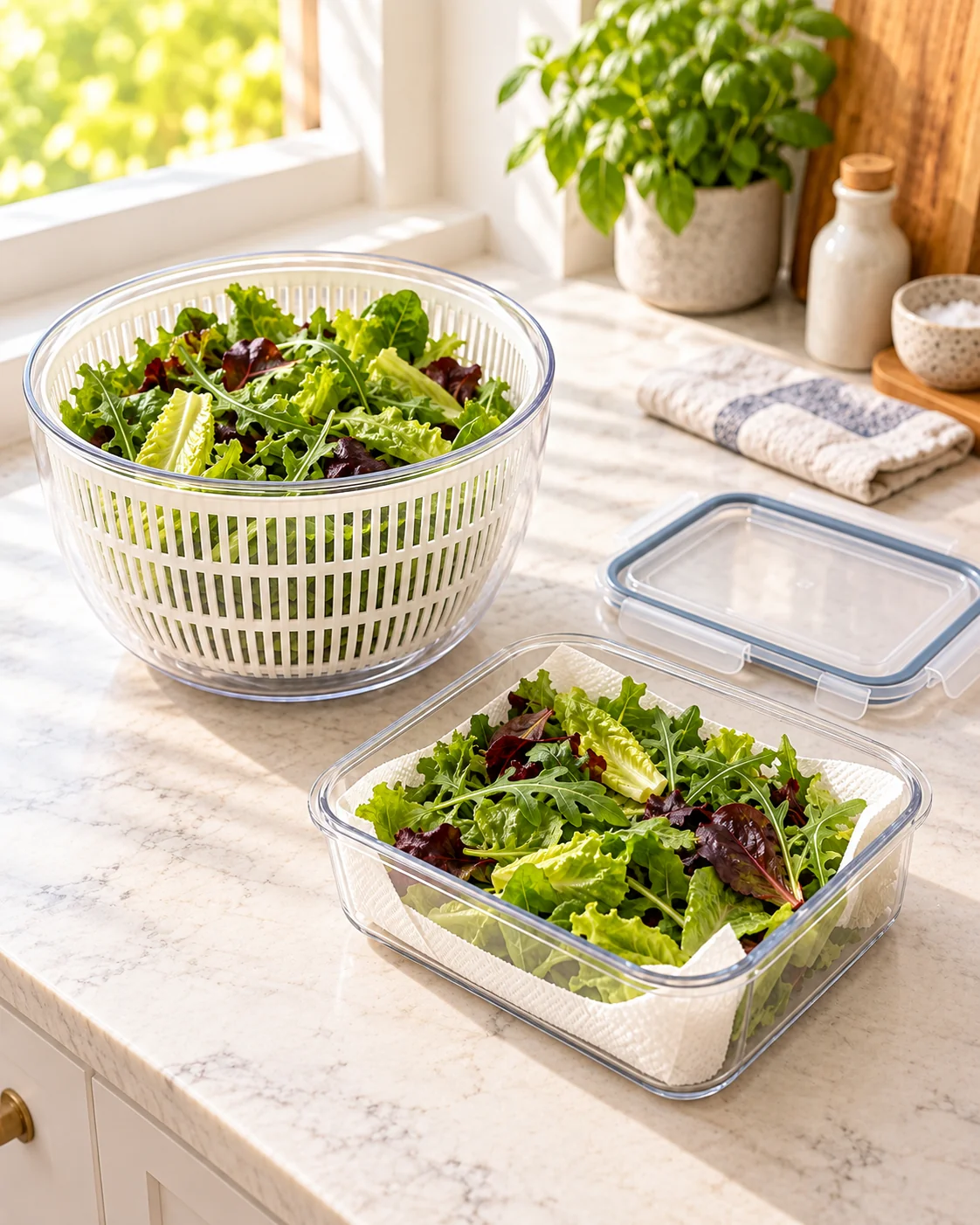
Greens arrive in different conditions. A whole head of romaine, a bunch of sandy spinach and a sealed bag marked ready-to-eat do not need the same treatment. Read the package, inspect the leaves, and choose a workflow that keeps clean and unclean produce separate.
Five steps from bag to bowl
Read and inspect
Check whether packaged greens are labeled pre-washed or ready-to-eat. Look through loose leaves and whole heads for decay, heavy bruising or trapped debris. Remove damaged outer leaves before they spread moisture through the batch.
Do not assume: every bag of leaves has already been washed.
Wash under running water
Rinse produce thoroughly under cool running water, moving leaves so water reaches folds and ribs. Do not use soap, detergent or commercial produce wash. For sandy greens, separate the leaves and repeat the rinse with clean water until no grit remains.
Keep clean: hands, sink, spinner, colander, towels and work surface.
Dry completely
Spin in manageable batches, then spread the leaves on a clean towel and blot any wet folds. A packed spinner cannot move water effectively. Dry surfaces hold dressing better and reduce the free moisture that accelerates collapse in storage.
Check: thick ribs, cupped leaves and the base of whole heads.
Pack with breathing room
Use a clean container or bag large enough to avoid crushing. Add a clean absorbent towel to manage condensation, particularly with pre-washed tender greens. The towel should not be dripping, and the leaves should not be compressed into a wet mass.
Adjust: replace a saturated towel and remove deteriorating leaves.
Refrigerate and reassess
Keep perishable greens in a refrigerator at 40°F / 4°C or below. Before using them, inspect the batch again. Discard produce that looks rotten; widespread slime, collapse or an off smell are reasons not to build dinner around it.
Remember: appearance cannot prove that food is free of harmful microorganisms.
Match the method to the structure
Whole heads
Keep intact when convenient, remove damaged outer leaves, and wash before use or wash and dry carefully for ready prep.
Tender leaves
Use gentle water flow, spin small batches and avoid compression. Baby leaves bruise easily and trap moisture when packed tightly.
Sturdy greens
Kale and mature spinach tolerate firmer handling, but their curls and stems need attention during rinsing and drying.
Herbs
Treat tender herbs like delicate leaves. Remove bands, inspect stems and protect them from crushing and pooled water.
Chicories
Dense heads often protect their inner leaves. Separate only what you need, then rinse and dry the folds thoroughly.
Ready-to-eat bags
If the label says pre-washed or ready-to-eat, FDA guidance says they can be used without washing again. Keep them away from unclean surfaces.
Choose convenience without storing wet leaves
Washing close to cooking keeps the storage setup simple. Washing ahead makes salads easier on a busy day, provided you can dry the leaves thoroughly and return them to a clean container. The wrong compromise is a half-dried batch sealed with visible water.
For a whole head that will be used gradually, leaving it intact can protect the inner leaves from handling. For a box of ready-to-use leaves, one careful prep session may be more practical. Choose the system you will actually maintain.
Running water, clean tools, no soap
Separate leaves when soil can hide near the base or inside folds. Hold them under running water and rub gently with clean hands. A bowl can help loosen grit, but use fresh water for the final rinse rather than treating cloudy wash water as clean.
Do not wash produce with soap or detergent. Keep produce preparation separate from raw meat, poultry and seafood, and clean any shared boards, knives or counters before they touch food that will be eaten raw.
Use centrifugal force, then patience
A salad spinner works because moving leaves shed water against the basket. Give them room to move, empty collected water between rounds, and repeat if droplets remain. Finish thick or deeply cupped leaves by hand with a clean towel.
If you do not have a spinner, drain the leaves well and spread them in a single layer between clean towels. Turn them rather than rubbing. Dressing clings to a dry leaf; a wet leaf thins the dressing before it reaches the table.
Watch the container, not the calendar
Condensation, a saturated towel and crushed leaves tell you more than a universal storage promise. Open the container, remove deteriorating pieces and replace wet absorbent material with a clean, dry towel. Avoid packing a large batch so tightly that air cannot move around it.
Different refrigerators and greens behave differently. Tender leaves can decline quickly; dense heads and sturdy greens may remain useful longer. Inspect before every use rather than relying on a fixed number of days.
Build a clean path to the bowl
Set up in one direction: unwashed greens, clean sink or rinse area, spinner, clean towel, storage container. This keeps muddy leaves from crossing back over the clean side. Labeling the container is useful when several people share the refrigerator.
When it is time to cook, take only what you need, close the container and return it to the refrigerator. Tear or cut leaves close to serving so exposed edges spend less time drying out.
Food-safety guidance: U.S. Food and Drug Administration: Selecting and Serving Produce Safely.
Why greens lose their nerve
- Grit remains.Separate the leaves, rinse folds and bases under fresh running water, then clean the spinner before another round.
- Leaves are bruised.Spin smaller batches, handle by the ribs when possible and stop compressing the storage container.
- Condensation builds.Dry the leaves again, wipe the container and replace wet absorbent material.
- Edges are drying.Use a better-fitting container and avoid leaving uncovered leaves in a strong refrigerator airflow.
- One leaf is failing.Remove it promptly and inspect the leaves touching it before returning the batch to cold storage.
- The batch seems spoiled.Do not taste to investigate. Discard produce that looks rotten or has extensive slime, collapse or an off smell.
Four practical routines
Romaine for several meals
Keep the head intact until needed, or separate, wash and dry every rib thoroughly before storing. Use it in a Classic Caesar Salad.
Baby leaves for quick sides
Read the label, avoid unnecessary rehandling if ready-to-eat, and keep the cold chain and storage container clean.
Kale for make-ahead prep
Remove damaged leaves, rinse curls and stems carefully, dry well, then strip or cut only when your cooking plan calls for it.
Radicchio used leaf by leaf
Remove and wash what you need while the remaining head stays protected; dry the ribs before dressing.