How to Season a Salad
A good dressing can connect a salad. It cannot reach inside an unseasoned tomato, bean or grain. Build flavor in layers, then let the final toss bring those layers together.
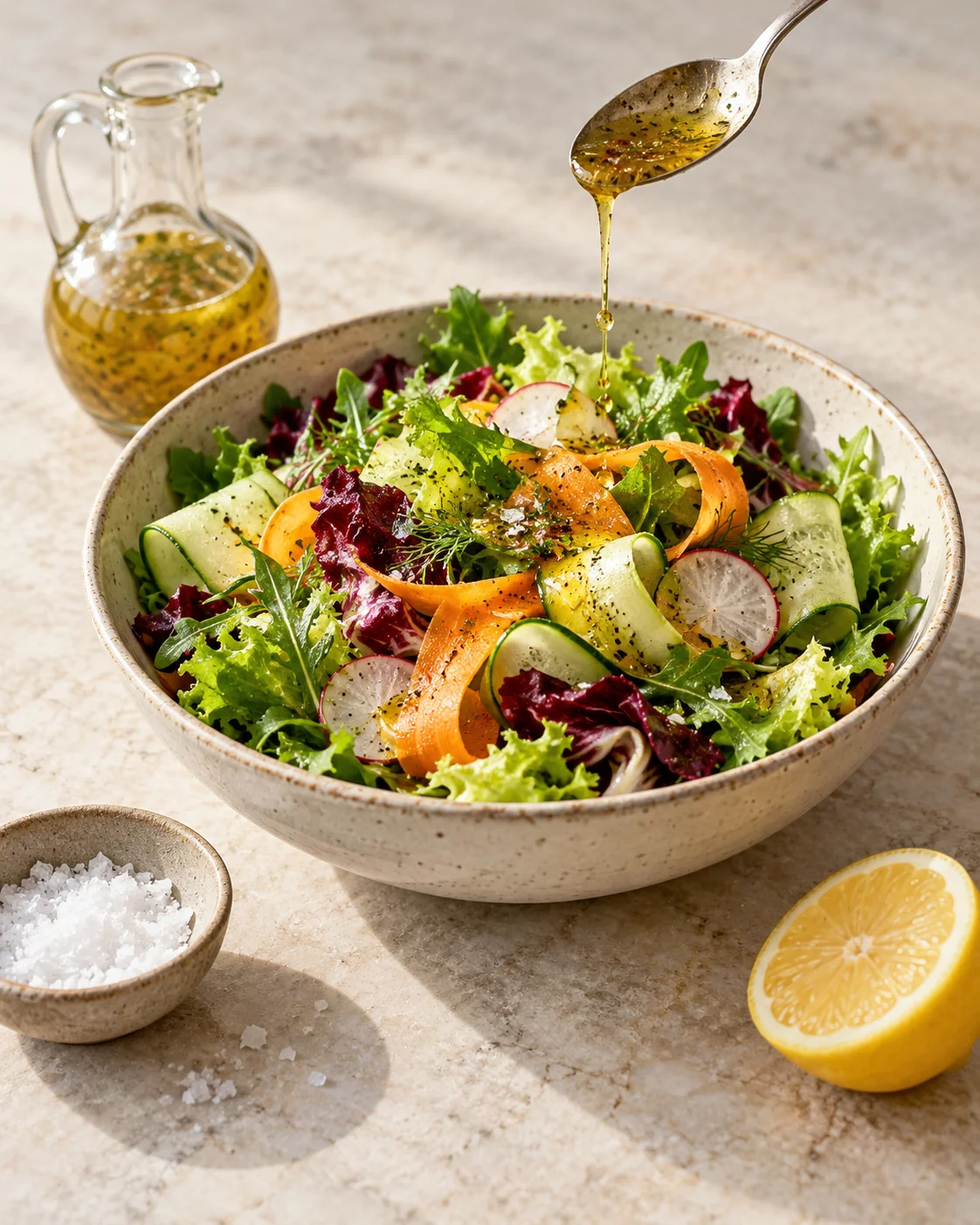
Seasoning is not a last-minute shower of salt. It is a sequence of small decisions: drawing flavor from juicy vegetables, waking up cooked grains while they are receptive, sharpening rich ingredients with acid, and tasting the finished forkful rather than the dressing alone.
Five moments to taste
Before cooking
Season vegetables, grains and proteins as their own ingredients. Salt roast vegetables before they enter the oven; season cooking water for grains; taste beans before they join the bowl. Their interiors should not depend on dressing for all their character.
Watch: salty cheese, olives, capers and cured foods will contribute later.
While ingredients are warm
Warm potatoes, grains and beans take on vinaigrette readily. Add enough to give them brightness and definition, then let them cool. Reserve some dressing for the final assembly because absorbed seasoning and surface gloss do different jobs.
Try: a spoonful of Classic Vinaigrette on warm lentils or farro.
Before the bowl
Taste every prepared component alone. A slice of tomato, a bean and a piece of chicken should each make sense. This is the easiest moment to correct a bland element without over-seasoning everything around it.
Keep separate: fragile leaves and crisp garnishes still need protection from moisture.
During the toss
Add dressing in stages around the sides of a roomy bowl. Lift from the bottom, turn, and taste a complete forkful containing the base and the strongest accent. Stop when the salad looks lightly glossy rather than wet.
Taste together: one olive or cheese crumble can change the salt level of the whole bite.
At the finish
Use finishing salt, pepper, citrus zest, herbs or a final thread of oil for aroma and contrast, not to rescue a flat bowl. Add crunchy and delicate elements last so their texture remains distinct.
Then serve: tender leaves begin changing as soon as they are dressed.
Six controls for a clearer bowl
Salt
Reveals flavor and reduces the sense of flatness. Add it in small stages, especially when cheese, olives or cured ingredients are present.
Acid
Lemon and vinegar create focus. Add a few drops when a salad tastes heavy or indistinct, then toss before judging again.
Fat
Oil, tahini, avocado and dairy carry aroma and soften aggressive bitterness or acidity. Too much can mute the bowl.
Sweetness
Ripe fruit, roasted vegetables or a restrained touch of honey can round hard edges. Sweetness should support the ingredients, not turn dressing into syrup.
Heat
Black pepper, mustard, chile and ginger add lift. Their effects arrive differently, so taste after each addition rather than stacking them automatically.
Aroma
Fresh herbs, toasted spices, citrus zest and good oil often supply the final sense of freshness without changing the salt or acid level.
Let tomatoes and cucumbers tell you what they need
Juicy vegetables release water after salting. That can be useful: early seasoning draws out flavorful liquid that becomes part of the dressing. It can also flood delicate leaves. For a tomato-led salad, season the cut tomatoes in their serving bowl and keep their juices. For a leafy salad, season watery vegetables separately, taste, and add only as much released liquid as the composition can carry.
Cucumber varies. Thin slices for a quick side can be dressed immediately; thicker pieces in a composed salad may benefit from a short rest with salt, followed by draining. The aim is concentrated flavor and a pleasant bite, not a rigid ritual.
Meet bitterness instead of hiding it
Radicchio, endive and arugula bring character that should remain recognizable. Fat rounds their edges; acid keeps that fat lively; salt makes accompanying sweetness more apparent. Citrus, pears, roasted squash, creamy cheese and toasted nuts can all create contrast without pretending the leaves are mild.
Taste the leaf with the dressing, not separately. A vinaigrette that seems too sharp from a spoon may be exactly right against bitter greens, while a gentle dressing can disappear.
Season the interior, then refresh the surface
Potatoes, grains, lentils and beans need salt before assembly. Dress them while warm enough to absorb flavor, then taste again once cool: temperature changes how strongly seasoning is perceived. A final splash of acid or spoonful of vinaigrette can restore brightness without making the salad greasy.
Starchy salads also need texture and aroma. Add crisp vegetables, herbs and toasted seeds after the base is seasoned so those accents remain clear.
Dry first, season lightly, toss completely
Surface water dilutes seasoning and makes oil slide away. Dry leaves thoroughly, then begin with less dressing than you expect. Broad romaine and cupped leaves hold more than flat baby greens; finely shredded cabbage exposes far more surface than large pieces.
Use a bowl large enough to lift and turn. Uneven tossing creates salty pockets and dry handfuls, which often tempts the cook to add too much dressing.
Taste the salad, not its parts list
Build a forkful that contains a representative piece of every major element. If it is flat, decide whether it lacks salt or direction; a few drops of acid may be more useful than another pinch. If it is harsh, add more of the base, a little oil or a creamy element. If it is heavy, reach for acid, herbs or a crisp ingredient.
Make one adjustment at a time, toss, and taste again. Layered seasoning works because each decision remains small enough to understand.
When seasoning goes sideways
- Flat but salty.Add acid, fresh herbs or more unseasoned base rather than more salt.
- Sharp and thin.Add oil or a richer ingredient, then check salt once the acid is rounded.
- Watery.Drain excess vegetable liquid, add dry ingredients, and refresh with concentrated dressing.
- Bitter and severe.Bring in fat, salt and a measured sweet or juicy contrast; do not erase the leaf.
- Heavy and dull.Use acid, herbs, pepper or crunch before adding more dressing.
- Uneven.Move to a larger bowl and toss from the bottom before changing the formula.
Four bowls, four seasoning paths
Tomato + cucumber + feta + oregano
Salt the vegetables first, account for the feta, then finish with olive oil and enough vinegar to focus the released juices. See the full Classic Greek Salad.
Radicchio + orange + almonds
Season the leaf with a bright vinaigrette, use citrus for sweetness and juice, then let toasted almonds supply the dry finish.
Warm lentils + roast carrots + herbs
Salt the lentils as they cook, dress them warm, season the carrots separately, and add herbs only after the base cools.
Baby leaves + herbs + soft cheese
Dry the leaves completely, use a light vinaigrette sparingly, and add the cheese after tossing so it stays distinct.