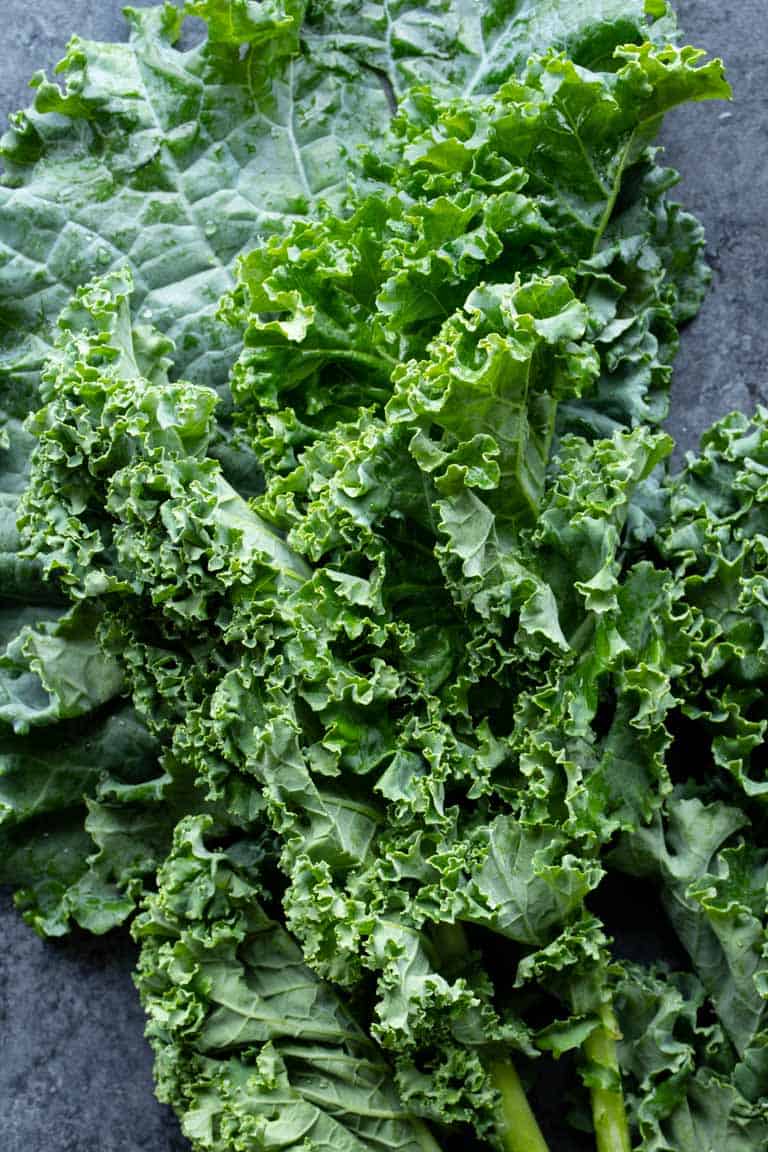
Kale
A sturdy, mineral-edged leaf that rewards decisive seasoning, fine slicing and just enough handling.
- Flavor
- Green, earthy and pleasantly bitter, with variety and season making a difference
- Texture
- Firm leaves, resilient veins and stems that range from tender to fibrous
- Best role
- Make-ahead salad base, braised green or crisp roasted element
- Prime move
- Slice finely and massage only until supple
Curly, lacinato and other market kale
Curly kale has ruffled leaves that catch dressing and turn crisp at their edges when roasted. Lacinato—also sold as Tuscan, dinosaur or cavolo nero kale—has long, dark, puckered leaves that are easy to stack and ribbon. Red Russian and similar flat-leaf types are often more tender, especially when young.
Names are not perfectly standardized across markets. Choose by the leaf in front of you: thickness, stem size and tenderness matter more to preparation than the label alone.
How to select kale
Look for deeply colored leaves that feel springy rather than limp. Avoid bunches with widespread yellowing, wet decay, blackened edges or a strong cabbage-like smell. Smaller leaves and slender stems are usually easier to use raw; large mature bunches are excellent when finely cut or cooked.
Wash between every fold
Strip or cut the leaves from thick stems, then swish them in plenty of cold water. Curly leaves hold grit in their folds, so agitate them gently and repeat with fresh water when needed. Spin thoroughly and finish on a towel, especially if the kale will be roasted or dressed ahead.
Stem, slice and massage
For a raw salad, remove thick central ribs: fold a leaf along the stem and pull the leafy sides away, or cut the rib out with a knife. Very young, slim stems can stay. Save tender chopped stems for a sauté; add them before the leaves so they have time to soften.
Stack the leaves and slice them into narrow ribbons. Add a small pinch of salt and a spoonful of dressing, then rub and squeeze for 30–60 seconds—only until the leaves darken slightly and become supple. Stop before they feel wet and bruised. Resting the dressed kale for 10–20 minutes will continue the tenderizing work.
Blanch, sauté or roast
Blanch leaves briefly in salted boiling water, then chill and squeeze dry for a tender green that can take assertive seasoning. Sauté sliced kale with olive oil and garlic until the stems yield. For crisp pieces, dry torn leaves completely, coat them very lightly with oil, and roast in a single layer; overcrowding traps steam.
Kale also settles readily into soups, bean dishes, pasta and braises. Add it according to the texture you want: early for softness, near the end for chew and greener flavor.
Storage and make-ahead sense
Refrigerate unwashed kale loosely wrapped or in a perforated bag, and use it while the leaves remain firm. Oregon State Extension gives a general refrigerated window of 5–7 days for harvested kale. Once washed, dry it thoroughly and keep it with a clean towel to manage moisture.
A dressed kale salad can improve during a short rest and travel better than tender leaves, but it is not indestructible. Add nuts, croutons and juicy fruit close to serving, and refrigerate leftovers promptly. After a day, expect a softer, more integrated salad rather than fresh crunch.
Dressings and ingredients that suit it
Kale can carry rich, clingy dressings because its leaves are substantial. Try Green Goddess Dressing, Caesar Dressing, tahini-lemon sauce or a mustardy vinaigrette. Use enough acid and salt to reach the leaf, then give the dressing time to settle in.
Deep & savory
Parmesan, pecorino, anchovy, garlic, bacon, mushrooms, lentils and roast chicken.
Bright & sweet
Lemon, cider vinegar, apple, pear, dried fruit, squash and sweet potato.
Crunch & cream
Almonds, walnuts, pumpkin seeds, breadcrumbs, feta, goat cheese and yogurt.
Reasonable substitutes
Collard greens are similarly sturdy but need finer slicing or more cooking. Swiss chard is softer, with juicy stems that deserve separate treatment. Mustard greens bring more peppery heat; mature spinach cooks faster and is much more delicate raw. In salad, shredded Brussels sprouts provide comparable resilience with a sweeter cabbage character.