Vinaigrette by Feel
Oil and acid give you a framework. The ingredient in front of you decides the final balance. Taste on a leaf, adjust one element at a time, and stop when the salad—not the spoonful—makes sense.
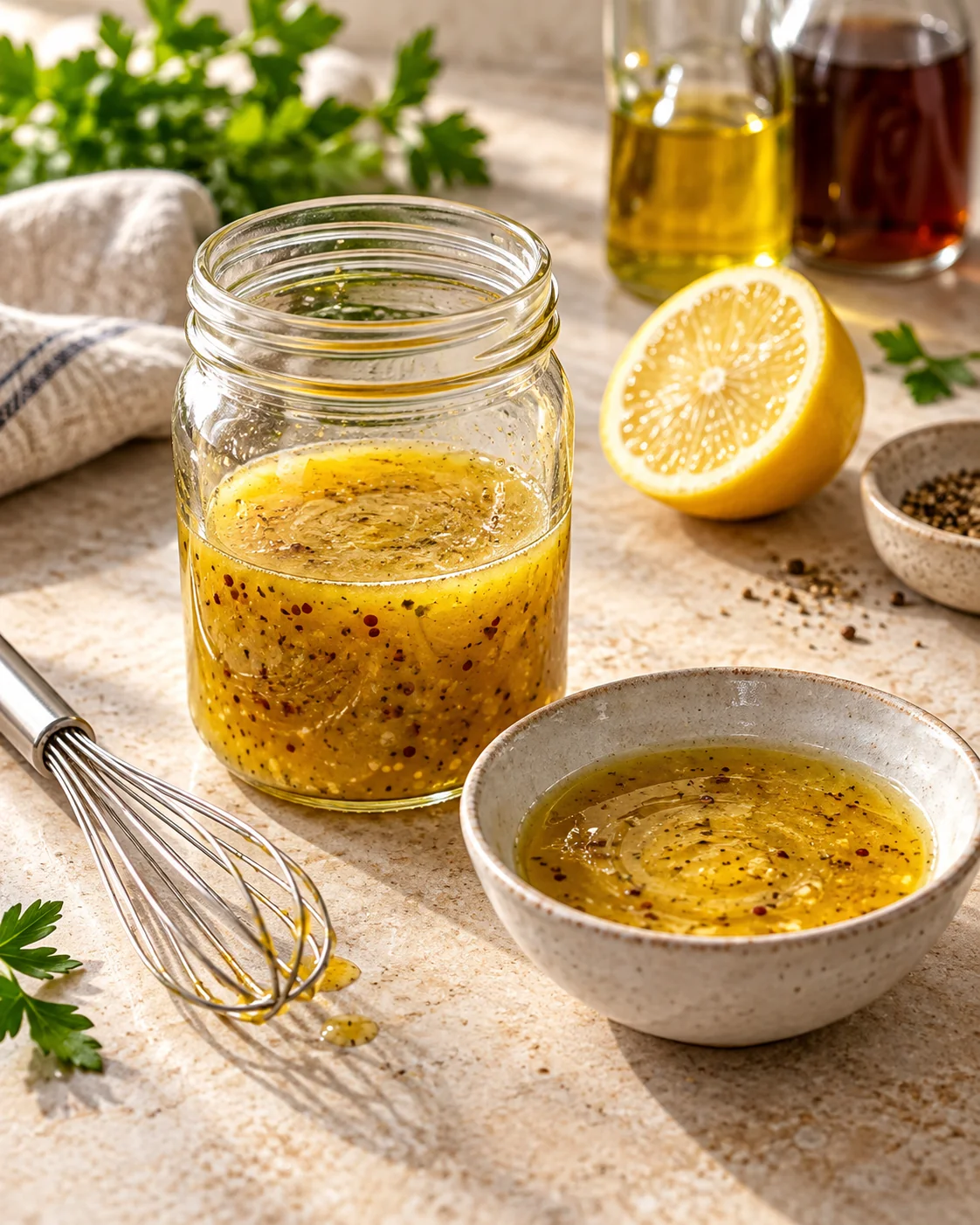
Three parts oil to one part acid is a useful place to begin, not a law. Mild vinegar, fierce lemon, peppery olive oil and neutral oil all behave differently. So do butter lettuce, cabbage, warm potatoes and beans. A dependable cook starts with a ratio, then listens to the ingredients.
Five moves, no guesswork
Choose the acid
Start with the flavor you want to notice: red wine vinegar for a direct savory edge, sherry vinegar for nuttiness, rice vinegar for gentleness, or citrus for fresh fragrance. Taste it before adding anything; acidity varies from bottle to bottle and fruit to fruit.
Begin small: it is easier to add acid than to dilute an oversized batch.
Dissolve the seasoning
Whisk salt into the acid before adding oil. Mustard, miso, honey or finely grated garlic can join at this stage. The mixture should taste concentrated because oil and the salad itself will soften it.
Account for: salty cheese, olives, capers and seasoned proteins in the final bowl.
Add oil gradually
Whisk in a few drops first, then a thin stream as the mixture turns opaque and lightly thickened. For a jar method, combine the ingredients and shake hard. Either method disperses oil into small droplets; mustard helps them remain suspended longer.
Expect: many homemade vinaigrettes will separate again. That is normal.
Taste on the ingredient
Coat one representative piece and eat it. Tender leaves need a dressing that can be noticed in a thin film; grains and beans may absorb flavor; bitter greens can welcome more acid and richness.
Compare: the complete Classic Vinaigrette for a measured starting point.
Correct with purpose
Add acid for lift, oil for roundness, salt for definition and water for a lighter texture without more sharpness. Whisk after every change. If a dressing is already too plentiful, adjust a spoonful in a second bowl rather than chasing the whole batch.
Record mentally: what worked with this acid and this salad, not a universal perfect ratio.
What each ingredient changes
Acid
Provides brightness and direction. Vinegars bring their own aromas; citrus brings fragrance, juice and sometimes sweetness.
Oil
Carries aroma, gives body and moderates sharpness. Strong olive oil contributes flavor; neutral oil lets other ingredients lead.
Salt
Defines both the dressing and the food beneath it. Dissolve it early and adjust again only after tasting the dressed ingredient.
Emulsifier
Mustard, tahini and miso help oil and water stay dispersed while adding flavor and body. They do not make every mixture permanent.
Water
Loosens a thick dressing and softens intensity without adding more oil. A teaspoon can make a clingy dressing flow over delicate leaves.
Aromatics
Shallot, garlic, herbs, spices and zest add character. Their strength changes over time, so taste again before serving.
Use three-to-one as a landmark
Three parts oil to one part vinegar makes a rounded, familiar vinaigrette, but the salad may want a brighter two-to-one balance or something gentler. Citrus juice can be milder than vinegar yet more variable. Sweet vinegar may need less sweetener; assertive olive oil may need a softer acid.
Measure while learning so you can repeat what works. Once the relationship is familiar, pour by eye and taste deliberately. “By feel” means informed attention, not refusing to measure.
Understand the texture you are making
Oil and watery acid naturally separate. Whisking or shaking breaks the oil into droplets dispersed through the acid. An emulsifier helps stabilize that dispersion, producing a dressing that clings more evenly and separates more slowly.
A broken vinaigrette is not ruined. Shake it, whisk it, or start with a little mustard in a clean bowl and gradually whisk the separated dressing back in. For a rustic chopped salad, a brief emulsion may be all you need.
Match weight to the thing being dressed
Soft lettuces are easily overwhelmed; keep their dressing fluid and use it sparingly. Romaine and cabbage tolerate a fuller emulsion. Warm grains, beans and potatoes absorb vinaigrette, so season them early and reserve some for a fresh finish. Roasted vegetables can carry bold acid because browning and sweetness provide contrast.
Surface shape matters too. Curled leaves catch more dressing than smooth ones, and finely shredded vegetables expose more area than large pieces. Judge the sheen, not merely the spoon count.
Give strong additions room to settle
Minced shallot softens as it sits in vinegar. Garlic becomes more noticeable with time. Dried spices can benefit from a brief rest, while tender herbs are freshest when added near serving. Citrus zest belongs late if you want its aroma at full volume.
When an aromatic dominates, make a small portion of plain oil-and-acid dressing and blend the two. Dilution is more controlled than adding sweetness to hide the problem.
Keep the base adaptable
A simple oil, acid, mustard, salt and pepper base can move in several directions. Divide it before adding garlic, herbs, sweetener or chile. One part can dress tender leaves; another can become bolder for roast vegetables.
Whisk or shake before each use, especially after standing. Taste again when cold oil has returned to a fluid texture. Separation alone is not a sign that a vinaigrette has failed.
Read the symptom
- Too sharp.Whisk in oil gradually, or a little water if the dressing is also heavy.
- Flat.Try salt first, then acid; extra oil will make a flat dressing quieter.
- Greasy.Add acid and enough water or emulsifier to restore flow and cohesion.
- Too thick.Whisk in water a teaspoon at a time until it coats rather than blankets.
- Won’t stay mixed.Re-whisk before serving or rebuild it slowly around mustard in a clean bowl.
- Good alone, lost on leaves.Increase salt or acid slightly and retest on the actual salad.
Four useful directions
Red wine vinegar + Dijon + olive oil
Direct, savory and versatile for tomatoes, beans, sturdy leaves and everyday chopped salads.
Rice vinegar + neutral oil + ginger
A lighter profile for cucumbers, cabbage and herbs; add sesame oil as a seasoning rather than the whole oil base.
Sherry vinegar + olive oil + toasted nuts
Well suited to grains, roast vegetables and bitter leaves, with mustard available when more cling is useful.
Lemon + olive oil + fresh herbs
Bright and aromatic for tender greens, asparagus, peas or a simple arugula salad.